
Research · Pilot wellbeing · Help-seeking
Pilot Mental Health
Understanding the barriers to seeking help—and developing a clearer route to support.
Doctoral research led by Louise Farrell-Doyle at Buckinghamshire New University.
The QRH is a non-operational draft for discussion and evaluation.
View the QRH PDF
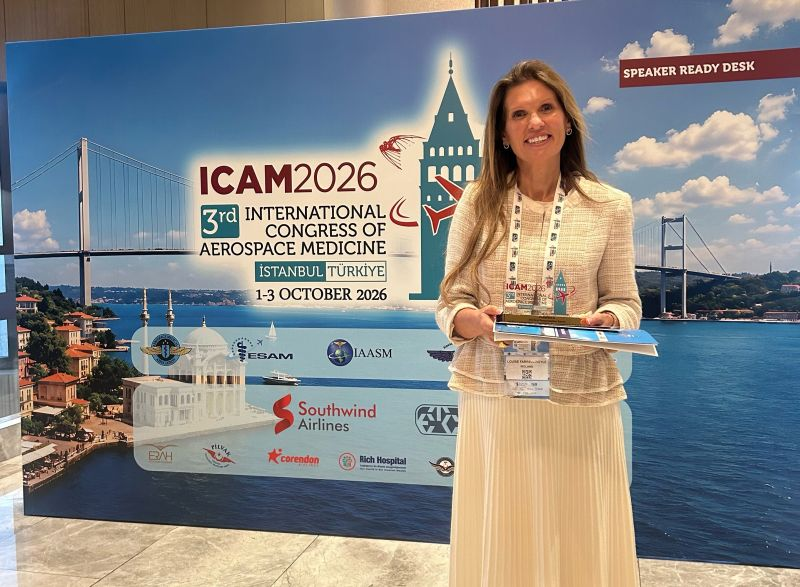
Research recognised
at ICAM 2026
Louise’s oral presentation at the 3rd International Congress of Aerospace Medicine in Istanbul was awarded joint Third Place in the Oral Presentation Awards.
“From Evidence to Checklist: Development of a Mental Health Quick Reference Handbook (QRH) for Pilot Self-Assessment and Help-Seeking”
The work brings together two years of doctoral research into the barriers pilots face when seeking help for mental health concerns.
Beyond the cockpit
Pilot Wellbeing, Personality, and Peer Support: Understanding Stress and Coping Beyond the Cockpit.
Flying is only one part of a pilot’s life. This doctoral research explores how pilots experience and manage stress at work and at home, and how peer support, family relationships and occupational factors shape wellbeing and help-seeking.
Pilots and their partners shared their experiences of the pressures of aviation, the support available to them and the barriers that can make it difficult to ask for help. Their contributions underpin the development of the Mental Health QRH.
- 01Stress at work and at home
Understanding how the demands of flying interact with personal and family life. - 02Trust and access to support
Exploring attitudes to peer support, confidentiality and seeking professional help. - 03From evidence to practical guidance
Using those insights to develop a draft self-assessment and help-seeking checklist.
From evidence
to checklist
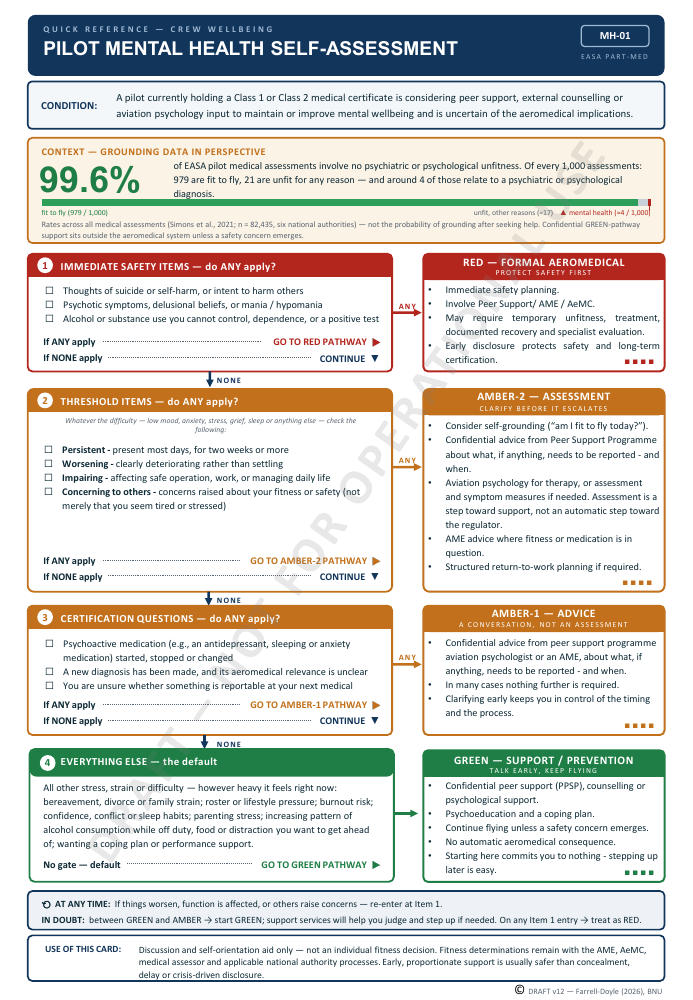
MH-01 · Pilot Mental Health Self-Assessment
Current draft: v12
A Quick Reference Handbook (QRH) uses the familiar structure of an aviation checklist to help pilots reflect on mental health concerns and consider possible routes to support.
The MH-01 draft uses four gates and colour-coded pathways as a discussion and self-orientation aid. Its purpose is to make help-seeking feel more understandable—not to make a diagnosis or decide whether someone is fit to fly.
Explore the one-page checklist, its gates and its pathways.
Identify wording, thresholds or assumptions that need improvement.
Help shape the next version through the existing QRH feedback page.
Feedback invited until 31 December 2026Analysis will begin in January 2027. Particularly from pilots, AMEs, medical assessors, aviation psychologists, peer support volunteers and other industry stakeholders. Please comment on the document itself; do not submit personal clinical information.
Built on shared experience
My sincere thanks go to the pilots and their partners who generously shared their time, insights and experiences. Their willingness to speak openly made this research possible, and I am honoured that their voices are being heard internationally.
I am deeply grateful to my supervisory team at Buckinghamshire New University for their guidance, challenge and support across psychology, aviation medicine and real-world pilot wellbeing:
Thank you also to the industry stakeholders and fellow academics who reviewed the QRH. Your feedback has strengthened the draft and helped ground it in practical aviation realities.
Like everything in aviation safety, this work is a continuing cycle of improvement.
Louise Farrell-Doyle
Aviation psychologist and doctoral researcher
Looking for support?
The QRH feedback process is for reviewing the draft document. It is not a clinical service or a route for urgent help. If you need support, contact your peer support programme, your AME or an aviation psychologist.